
Dear Democratic Senators –
Senator Markey is right.
In a recent interview with StreetsBlog, Senator Markey said that when it comes to Surface Transportation Reauthorization negotiations, Democrats should “etch-a-sketch” all of the negotiation.” He went on to say, “We are now negotiating with a MAGA-controlled House and Senate, we’re negotiating with a MAGA White House. And we’re gonna win the House and Senate (claps). We’re not passing any bills before the election. So, let’s just etch-a-sketch. We win the House and Senate, let’s start all over again.”
He is right. And we urge you to follow his lead.
At a time when affordability is a pressing concern for families, the BUILD America 250 Act passed by the House Transportation and Infrastructure Committee earlier this year fails to meet the moment. By increasing guaranteed funding for highways while cutting guaranteed funding for transit, the bill would be a significant step backward for cities, towns, and rural communities—limiting families’ freedom to choose how they get around—and harming the tens of millions of people who rely on public transportation every day.
For most families, transportation is the second-highest household expense after housing, and the cost of driving has only gone up with record-high gas prices and rising car prices. In much of the country, transportation costs are driven by the necessity of owning and operating a car, covering purchase, financing, fuel, insurance, and maintenance. These expenses add up to thousands of dollars each year, placing a significant burden on working families.
The most effective way to lower these costs is to give people more transportation options. Frequent, reliable public transit and paratransit, along with safe infrastructure for walking and biking, can give Americans viable alternatives to costly car ownership. Yet for decades, federal policy has underinvested in transit, allocating roughly $1 to transit for every $6 spent on highways. The result is a system that leaves too many Americans with no choice but to drive.
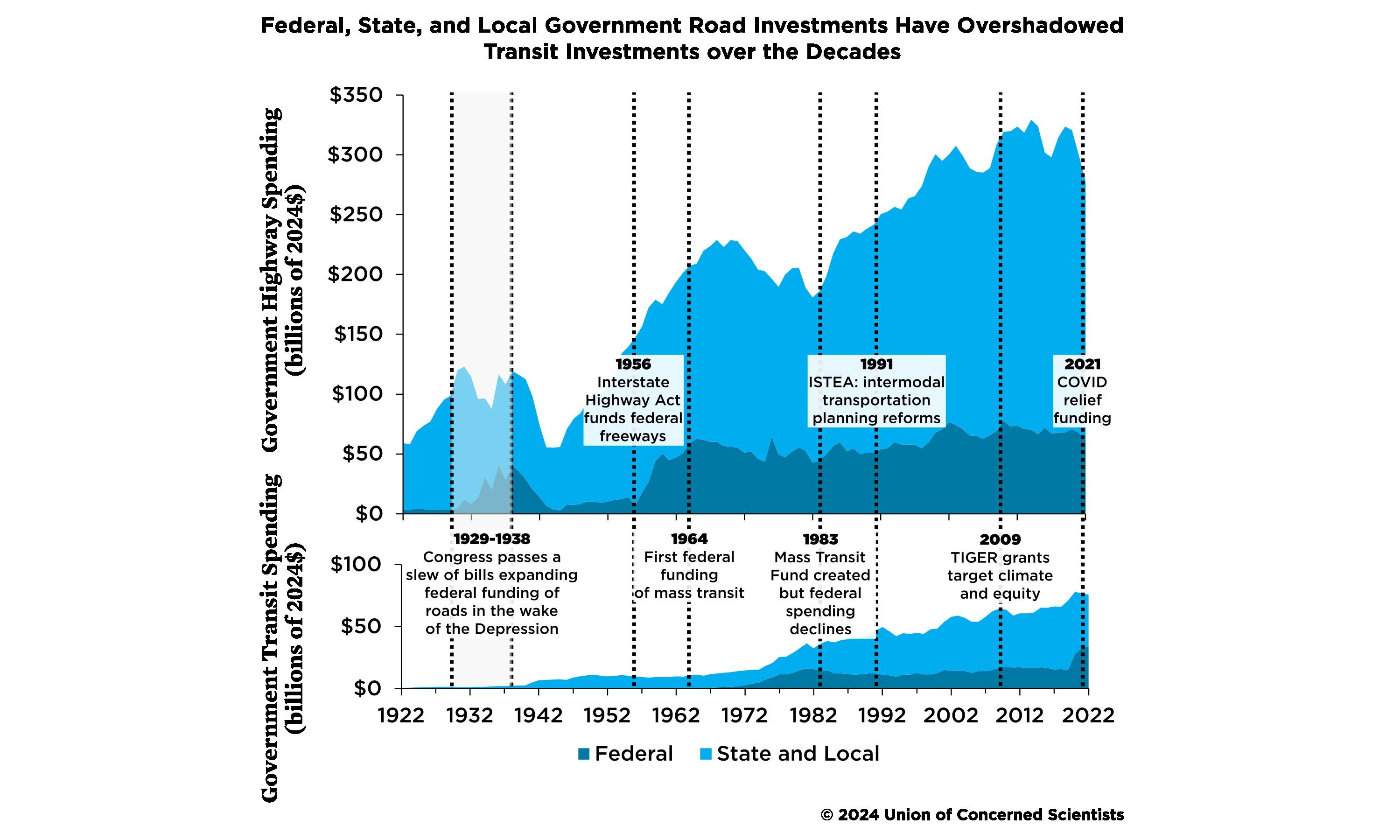
The House bill continues that misguided trend. We urge you to reject it and move a bill that:
Funds Transit Frequency with dedicated federal operating funds. The federal transit program primarily funds capital investments, not day-to-day operating expenses. Transit agencies can purchase new buses or build new rail lines with federal funds, but often lack sufficient funding to cover the costs of fuel and family wages for operators. Even in small and rural communities that can use federal funds for operations, resources are insufficient to address both operating and capital needs. A new bus serves no purpose without the money to operate it. Congress needs to establish a consistent, predictable source of funding for transit operations. Including service standards ensures the additional funding is used to improve service, not replace local funding. Given the workforce shortage, the bill should include a set-aside for workforce recruitment and retention. With additional operations funding, transit agencies of all sizes will be able to improve service, which will increase access to jobs and other key destinations, improving economic productivity and reducing household costs.
Matches transit funding to demand. Transit is inadequate in America in part because it has been woefully underfunded for decades. There is far more demand for transit than the current federal transit program can support. According to the American Public Transportation Association, an additional $36 billion is needed above IIJA levels to build currently planned rail and BRT projects. The Federal Transit Administration and the Volpe Center have estimated that there is a transit state of good repair backlog of over $140 billion. The next reauthorization must meet this demand by increasing transit funding and making it easier to deploy those dollars, including streamlining requirements and accepting local match for new transit projects on par with that required for highways.
Strengthens transit in small and rural communities. Transit providers in small and rural areas often struggle to meet their communities’ needs due to a lack of funding and staff capacity. Rural Americans are isolated from jobs, healthcare, and other essential needs. We need to remove barriers and improve the federal transit program to increase access to quality transit in small towns and rural areas. This means:
- Authorizing additional funding for rural transit programs.
- Raising the federal share of rural transit operating funding from 50% to 80%.
- Incentivizing coordination across jurisdictional boundaries and across multiple funding sources.
- Requiring states to provide multi-year funding estimates to rural transit agencies to enable long-term planning.
- Incentivizing innovative solutions and partnerships with competitive grant funding.
- Expanding the federal procurement clearinghouse to help small and rural transit agencies right-size their purchases, increase efficiency, and facilitate lower capital costs.
Build transit-ready communities to increase safety and catalyze economic development. Transit operates most efficiently on roads designed to accommodate it, through transit lanes, traffic signal priority, and safe access for all road users, among other features. Transit also contributes to and benefits from economic development along transit corridors. To support the efficient operation of transit and grow transit ridership, the reauthorization should:
- Increase flexibility in roadway design standards to support safe travel for transit riders (whether on the bus or train or traveling to/from the bus or train);
- Dedicate funding for transit-supportive infrastructure such as sidewalks, bus shelters, ADA access, traffic signal priority, queue jumps, and bus lanes; and
- Incentivize mixed-use, mixed-income development near transit stations and hubs.
Prioritize road maintenance to improve infrastructure conditions, increase safety, and reduce families’ costs. Maintenance on existing roads, bridges, and highways should be prioritized ahead of roadway capacity expansion. Deferring needed maintenance increases costs down the road and undermines effective asset management. Roads in bad repair increase costs for families who drive and undermine the reliability and safety of transit.
Abundant transit unlocks freedom of movement for everyone, regardless of age, income, or ability. We look forward to working with you to ensure the next reauthorization bill supports high-quality transit service throughout America.
There is still time to get this right, and we urge Congress to meet this moment by investing more in affordable transportation options, funding transit operations, and prioritizing federal-aid roadway maintenance.
But doing so would mean taking the etch-a-sketch to the current bills.
Sincerely,
National Campaign for Transit Justice, LeeAnn Hall
America Walks, Mike McGinn
1000 Friends of Wisconsin, Trevor Roark
Activate St Pete, Max McCann
Active Transportation Alliance, Amy Rynell
Alaska Mobility Coalition, Patrick Reinhart
Arkansas Community Organizations, Neil Sealy
Arts2Action Fund, Charles Chamberlain
Better Eugene-Springfield Transportation (BEST), Rob Zako
BetterTransitNOW, Paul Sturm
Bicycle Coalition of Greater Philadelphia- Transit Forward Philadelphia, Julio Rodriguez
Bike Cleveland, Jacob VanSickle
Bike Durham, John Tallmadge
Bike HoCo – Bicycling Advocates of Howard County (Maryland), Jack Guarneri
Bike Newport, Bari Freeman
BikeLA, Eli Akira Kaufman
Brooklyn Center for Independence of the Disabled, Joseph G. Rappaport
Clean Power Lake County, Mayra Mendez
Coalition for Clean Transportation, Joshua Houdek
Coalition for Economic Justice, Anthony Gault
Coalition for Responsible Transportation Priorities, Colin Fiske
Coalition for Smarter Growth, Stewart Schwartz
Democracy for America Advocacy Fund, Charles Chamberlain
Denver Streets Partnership, Jill Locantore
Detroit Greenways Coalition, Todd Scott
Eastside Urbanism, William King
El Paso Streets Coalition, Luis “Sito” Negron
Elmont Cultural Center, Mimi Pierre Johnson
Genesis (Gamaliel Affiliate of the Bay Area), Mary Lim, J.D.
Greater Greater Washington, Chelsea Allinger
GreenLatinos, Andrea Marpillero-Colomina
HEAL Utah, Lexi Tuddenham
Health Professionals for a Healthy Climate, Ava Corey-Gruenes
Independent Living Center of the Hudson Valley, Inc., Denise Figueroa
Just Economics WNC, Mike Holmes
Kansas City Bus Riders Union, Anthony Cunningham
La Crosse Area Transit Advocates, Cathy van Maren
Lefty Loosey Bicycle Collective, Elijah Kauffman
Living Independence Network Corporation, Jeremy Maxand
Living Streets Alliance, Vanessa Cascio
Madison Area Bus Advocates, Susan De Vos
Maine People’s Alliance, Ben Chin
Metropolitan Planning Council, Audrey Wennink
MountainTrue, Susan Bean
Move California, Eli Lipmen
Move LA, Eli Lipmen
Move Minnesota, MJ Carpio
Move Redmond, Kelli Refer
Moving Maine Network, Zoe Miller
Native Organizers Alliance, Judith LeBlanc
Native Organizers Alliance Action Fund, Judith LeBlanc
Natural Resources Council of Maine, Josh Caldwell
New York Communities for Change, Olivia Leirer
New Yorkers For Transportation Equity, Danny Pearlstein
No More Freeways, Chris Smith
Nondrivers Alliance, Anna Zivarts
Nu-Voters Movement, Omari Shakur
One Fair Wage, Fekkak Mamdouh
Open Plans, Sara Lind
Orange County Legislature, Gabrielle Hill
Oregon Walks, Zachary Lauritzen
Our Streets, Joe Harrington
Planning and Conservation League, Matthew Baker
Portland: Neighbors Welcome, Jesse Rawlins
Progressive Leadership Alliance of Nevada, Laura Martin
Providence Streets Coalition, Liza Birch
Providence Urbanist Network, Daria Phoebe Brashear
RI Transit Riders, Amy Glidden
Riders Alliance, Danny Pearlstein
Rise and Resist Elevator Action Group, Jessica Murray
RVA Rapid Transit, Courtney Farrar
Seamless Bay Area, Kaleo Mark
Southwest Energy Efficiency Project, Matt Frommer
Streets For All, Michael Schneider
StreetsPAC, Eric McClure
Sunrise Movement KC, Anthony Cunningham
Sustain Charlotte, Meg Fencil
Tacoma On the GO, Laura Svancarek
TakeItBack.Org, Charles Chamberlain
The Equiticity Racial Equity Movement, Olatunji Oboi Reed
The Lake Communities Alliance, Jessica Lansdale
The Street Trust, Lindsay Huber
The Transit Coalition, Bart Reed
Tidewater Transit Advocacy, Mary Lou Burke, Chair
Transbay Coalition, Carter Lavin
Transform, Abibat Rahman-Davies
Transit Alliance Miami, Cathy Dos Santos, Executive Director
Transit Columbus, Stevie Pasamonte
Transit For All PA, Connor Descheemaker
Transit Forward Philadelphia, Stephen Bronskill
Transit Trekker, Kimberly Huntress-Inskeep
Transportation Choices Coalition, Katy Ricchiuto
Transportation for Maine, Zoe Miller
Transportation for Massachusetts, Pete Wilson
Transportation Riders United, Megan Owens
Vision Forward Association, Jaclyn Borchardt
Walk Bike Nashville, Meredith Montgomery
Walk San Francisco, Jodie Medeiros
WalkMassachusetts, Brendan Kearney
We are CASA, Patrick Giuliani
West Line Corridor Collaborative, Michael Hughes
Wisconsin Transit Riders Alliance, Cathy van Maren