
St. Paul, MN – I’ve lived in the Twin Cities for about four years while attending college, where I’m studying aerospace engineering. Originally from Colorado, I’ve experienced transit in rural, suburban, and urban settings. However, it wasn’t until I moved here that I started using transit regularly. Between buses, light rail, and biking, I can get just about anywhere I need to go without a car.
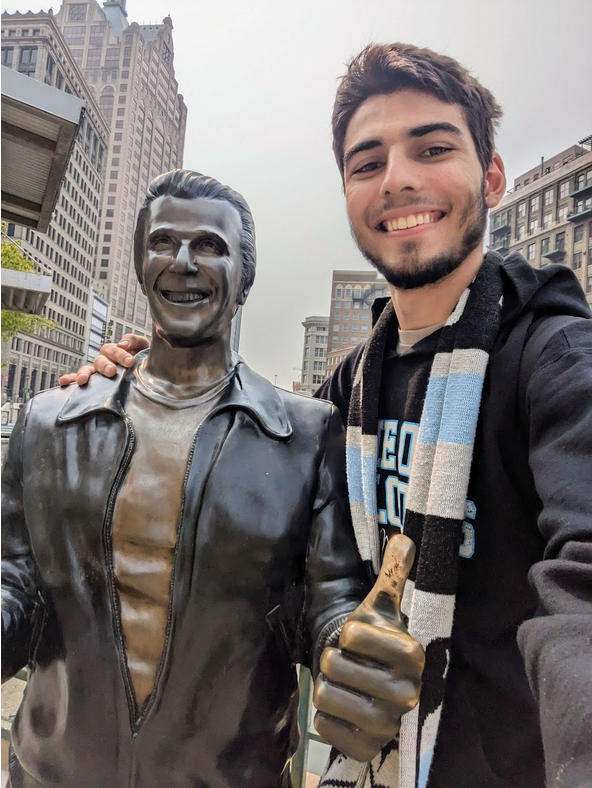
Most of my trips are for school, work, or visiting friends. The commute to my internship involves a combination of light rail and bus rapid transit (BRT), and I regularly travel between Minneapolis and St. Paul for events and activities. I’m also part of the Minnesota United supporters group and a recreational hockey league, and transit helps me get to games, practices, and even to paint banners for our team. Biking and transit go hand-in-hand for me—I often bring my bike on the bus or train to connect the last stretch of my trips.
Overall, I think the Twin Cities’ transit system is pretty solid. The coverage is excellent, and I can easily reach most destinations. However, there are some frustrations. One of the light rail lines is often delayed because it runs alongside vehicle traffic, unlike the other line, which is grade-separated and much faster. Improvements like signal priority and more grade separation would make a big difference for riders.
Transit stops here are generally well-equipped, with benches, shelters, and trash cans, and many of the newer BRT stops are being upgraded with fancier shelters. Heated shelters are a lifesaver during our harsh winters and make waiting for transit much more comfortable.
If I could talk to members of Congress, I’d ask them to invest more in public transit. My sense is that many lawmakers see transit as just another government-subsidized program, but I think it’s much more than that—it’s an investment in our communities. Transit creates jobs, supports housing development, and connects people to essential services like healthcare and employment. When you make transit more accessible and reliable, you see a ripple effect of benefits throughout the community. It’s not just about moving people from point A to point B—it’s about creating opportunities and building stronger, more connected cities.